Showing Posts From
Agency

You need to die
In Alma 22, we read of the powerful conversion of King Lamoni's father. I noticed something strange in the account following the king's lesson on the plan of salvation. The Book of Mormon is clear that the Nephites understood that both the wicked and the righteous would be resurrected. Yet, in response to learning about this universal resurrection, the king prays to God, asking "that [he] may be raised from the dead." Stranger still, in answer to this prayer, the king is immediately "struck as if he were dead." What is going on here? I have some thoughts.

"Efficiency" isn't that important to God
As a software engineer, it's my job to find the optimal way to do things. I'm constantly looking for the most efficient method to sort a list, store stuff in a database, and speed up a program. And once my brain is set to "optimization mode," it's hard to turn it off. For example, recently, as I waited for a temple session to start, I found myself mentally inventing ways to increase the throughput of proxy ordinance work. I came up with a way we could do ten times the number of names per endowment session with just a few minor tweaks and no degradation of the experience. But the Spirit interrupted my silent design session with a gentle rebuke: "This is the Temple. Look around. What gave you the idea that 'efficiency' is what's most important here?" As I pondered this experience later, many stories and insights from ancient and latter-day scripture flooded my mind. What did I learn? That by mortal standards, God operates very inefficiently, because He's working with a completely different set of priorities. Here are several seeming "inefficiencies" I'm grateful for.
A prison built with our own hands
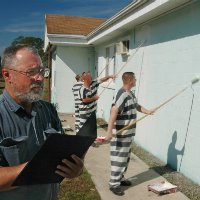
The battle was fierce, but also short and decisive—despite a huge loss of men and a painful personal wound, Captain Moroni had thrown "one of the greatest of the armies of the Lamanites" into complete disarray. But Moroni "did not delight in bloodshed;" when he saw that his enemies were beaten, he offered them terms of surrender. The Lamanite army accepted his terms, and the prisoners were marched to the land of Bountiful. There they were put to work: they dug ditches, they piled up dirt, and they built a giant wall around the border of the city. Once the Lamanites had fortified the city, they became its new residents: "in this city [the Nephites] did guard the prisoners of the Lamanites; yea, even within a wall which they had caused them to build with their own hands" (Alma 53:5).

The easy way and the hard way
This may come as a surprise to many of you, but sometimes my children don't listen. Take bedtime, for instance. At the end of the day, my 4-year-old son and I both know how things are going to end. If my son cooperates when it's "that time," his bedtime will be preceded by playtime, two bedtime stories, and a lullaby. If he throws a tantrum, he will simply be placed in his bed with nothing more than a kiss and a parental pleading for improved behavior the next day. Whether my son chooses to cooperate or not, the end result is the same: he will be in his bed and sleeping. But how pleasant that process will be is up to him. It's his choice-- we can do it the easy way or the hard way.

Why we bridle
The other day I read this verse from Alma the Younger to his son Shiblon:Use boldness, but not overbearance; and also see that ye bridle all your passions... -- Alma 38:12I think this is one of the most oft-quoted verses in all the Book of Mormon, usually in a lesson targeted to young men and young women (you know the one I'm talking about). But what stuck out to me this last time through is the rest of the verse:See that ye bridle all your passions, that ye may be filled with love.