Showing Posts From
Leadership

Busting Myths about the Family Proclamation
Thirty years ago, in a meeting most of the world ignored, fourteen Apostles and a Prophet of God presented a proclamation. That proclamation would become one of the most quoted, debated, and misunderstood documents in modern religious history. When President Gordon B. Hinckley read "The Family: A Proclamation to the World" on Sept 23, 1995, few could have predicted the intense controversy and cultural battles that would hit us during the next 30 years, nor that this uncontroversial nine-paragraph statement would become the great divider of the Church. Yet the apostles who crafted it knew exactly what they were doing. And three decades later, their prophetic foresight has been vindicated. As the Church has made its stand, Satan has responded from both without and within the Church. One tactic he utilizes within the Church is to spread myths and misconceptions about the Proclamation itself, hoping to undermine its authority and the confidence of members in its teachings. Let's separate the truth from the myths.

Do We Proclaim the Proclamation?
I’ve always been an odd duck. Most kids played soccer during recess; I preferred reading and discussing theology. As a young adult, I discovered FAIR (a leading organization for Latter-day Saint scholarship and apologetics). Now, my annual pilgrimage to Utah for their conference is a highlight of my year. But Latter-day Saint apologetics is a niche hobby-- one my friends have always found uninteresting... until now. Over the past two weeks, many have reached out, saying they watched the FAIR presentations and want to attend next year’s conference. What sparked this newfound curiosity? The old adage: “There’s no such thing as bad publicity.”

You sure you want to say that?
A few years ago, I saw a Twitter post asking how a Latter-day Saint might respond to a situation involving family and same-sex marriage. It was a great question, so I reposted it with my brief thoughts about the tricky balance of love and faith and how I might respond, and then I happily went to bed. I had no idea what was about to happen.

"Efficiency" isn't that important to God
As a software engineer, it's my job to find the optimal way to do things. I'm constantly looking for the most efficient method to sort a list, store stuff in a database, and speed up a program. And once my brain is set to "optimization mode," it's hard to turn it off. For example, recently, as I waited for a temple session to start, I found myself mentally inventing ways to increase the throughput of proxy ordinance work. I came up with a way we could do ten times the number of names per endowment session with just a few minor tweaks and no degradation of the experience. But the Spirit interrupted my silent design session with a gentle rebuke: "This is the Temple. Look around. What gave you the idea that 'efficiency' is what's most important here?" As I pondered this experience later, many stories and insights from ancient and latter-day scripture flooded my mind. What did I learn? That by mortal standards, God operates very inefficiently, because He's working with a completely different set of priorities. Here are several seeming "inefficiencies" I'm grateful for.

Nephi's "burning love"
It's amazing how much we can learn from a story the second time it's told. Details and viewpoints you missed entirely the first go-round tend to come out in subsequent tellings (like Joseph Smith's First Vision). You may not have caught it, but this month in Come, Follow Me, we're reading one such re-telling that teaches us some important truths about love-- what it is and what it isn't. Perfect for Valentine's Day.
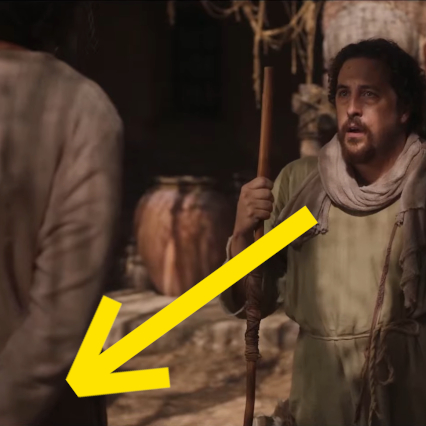
What's up with Jesus's hands?
We have three kids ages 6 and under. Time out as a couple is rare and fleeting. Movie theaters are virtually out of the question. But when the first two episodes of The Chosen hit the box office last month, my wife and I made sure to go. I loved it. Watching those episodes was a wonderful experience. Until I ruined it. Spoilers ahead, you've been warned.

When God redirects us
The converts of Ammon never cease to amaze me. These remarkable individuals, who "never did fall away," exemplified quiet yet determined discipleship. When the Lamanite armies came to exterminate them, they did the unexpected.

The Prophet gave me a blessing today
You hear a knock on your door. You aren't expecting visitors, so you glance through the window first, and your jaw drops. In a daze, you open the door and greet the Prophet of God. He tells you he felt impressed to visit your house and give you a personal priesthood blessing.

The gift of our calling
It was five years, almost to the day, but if you saw a picture of that Bishop from the start of his term, you'd be forgiven for thinking 15 or 20 years had passed. The marital disputes, the midnight runs to the chapel to forestall eviction, and the last-second interviews had taken their toll on both his hairline and his beltline. "Busy as a man can be," indeed. But finally, it was time to pass the baton. The new Bishop took the stand to bear his testimony. "Brothers and sisters, during this season of the year we express gratitude for gifts. I want to start by thanking our Bishop for the gift of his devoted service in our ward." A moment of silence follows-- the Latter-day Saint chapel equivalent to hearty applause. "I thank my wife and children for the gift of accepting the call to sustain me without hesitation." Another well-deserved round of silent mental clapping. "And I especially want to thank God for His gift of calling to me to be the new Bishop." Wait... what?

Missionary work: getting in "the zone"
I pointed out in my previous post that the Lord and His servants have made it clear that when it comes to encouraging member missionary work, we need go beyond gimmicks and corporate management tactics. The Gospel of Jesus Christ doesn't need salesmen. Motivating members to occasionally perform missionary actions is not enough. God wants us to become missionaries in our hearts. We don't need a new program-- we need a new perspective. So... how do we do that? How do we turn missionary work from an activity we do to a lifestyle we live? It all starts with getting "in the zone."

Every member a... salesman?
What is the number one complaint among full-time missionaries? Zealous missionaries everywhere are disappointed that members are not inviting their non-member friends to hear the message of the Gospel. They are frustrated with good reason-- members generally are not doing our part to live our covenant to "stand as witnesses of God at all times and in all things and in all places." Investigators, less-actives, and even the random people missionaries talk to at doorsteps are far more likely to refer them to a neighbor or friend than the active members of the Church are. Those who know the most about the Gospel and have experienced its blessings firsthand in their lives are usually the most reluctant to suggest that it be shared with others they know and love. So... what should we do about this lack of member participation? For starters, when it comes to member missionary work, we don't need a new program-- we need a new perspective.

The secrets of Godliness
I've heard some members who were born in the Gospel wish that they had been born outside the Church and then converted later in life. These members look back and say, "I wish I could have actually had fun in my youth-- sow my wild oats, carefree, without worrying. Get married, hear the Gospel, join the Church, and then live all the rules after I've really enjoyed life." In the minds of these members, converts get the best of both worlds-- they experience the pleasures of temptation in their youth and then the light of the Gospel once they've had all their fun. The Lord has a strong message for anyone who wishes they could go back in time and "live a little" and repent later.

Sorry Lord, could you repeat that?
This past week in Come, Follow Me, we read "the crowning event recorded in the Book of Mormon," the "personal ministry of the Lord Jesus Christ among the Nephites soon after His resurrection." After 600 years, the Nephites were finally privileged to stand in the presence of their Lord and Savior. You would think that Christ would be met with joyful, anticipated celebration. But that's not what happened at all. In fact, when the time came, it just really didn't click at first.

You are unqualified for your calling (and that's OK)
When I was little, I thought missionaries were basically superheroes. I pictured stalwart, obedient, faithful young men and women going all over the world, guided by the Spirit and teaching the truth in majesty and power, saving souls like a spiritual Superman. But then I went on a mission and learned that you can take a teenager to the temple, endow him with power from on high, set him apart from the world, commission him as a duly ordained minister and representative of Christ, put a name tag on him, and send him out with the Spirit... but a teenager will still be a teenager. Laziness, apathy, rebelliousness, phone addictions, slacking off, hormones, and general stupidity abound in the mission field just as they do at home. Having worked closely with missionaries both on and off my own mission, I think it's safe to say that across the board, teenagers just aren't qualified to be missionaries. In fact, I would dare say no one is qualified to be a missionary. Or an Elders Quorum President. Or a Bishop. Or the Prophet. We are all every one of us supremely unqualified for the job.

Unwearyingness
Christ gave His chosen Twelve Disciples in both continents a rare opportunity. One by one, he asked them "What is it that ye desire of me, after that I am gone to the Father?" Eleven of the Jewish Disciples and nine of the Nephite Disciples asked for the same thing: We desire that after we have lived unto the age of man, that our ministry, wherein thou hast called us, may have an end, that we may speedily come unto thee in thy kingdom.But John and three unnamed Nephites requested to remain on the earth and serve the Lord long after their natural lifespans. I used to wonder why the disciples were not unanimous in asking for that blessing. After all, who wouldn't want to be a missionary forever?

The restoration was messy (and that's OK)
Years ago, I heard a Bishop say: "Brothers and sisters, the restoration was messy." I didn't think much about his wording at the time. But over the few years following (including my mission), I encountered a lot of people wanting to "educate" me about early Church history. Joseph Smith was the most common target, of course. They cited all sorts of stories about him that seemingly "proved" he was a lying, womanizing con man. I mostly brushed off these claims during my mission. Those critics were not historians. I knew their agenda. I figured they were mostly lies, or at least huge distortions of the history. So, when I got home from my mission, I bought an 800-page history of Joseph Smith. It was written by an active stake patriarch and Church historian who worked on the Joseph Smith Papers project, so I figured his book would blow away all those false accusations with the fiery testimony of truth. But I was surprised to find that instead of tearing down all the stories the critics had told me, history largely confirmed them. And you know what? That's OK!

Ministering: less talk, more action
A few weeks ago, I was called to be the ward mission leader. Since then, I have been pondering what I need to do to magnify my calling. I have served with many different ward mission leaders both on and off my mission. Some jumped in with the missionaries. Others never learned the missionaries' names. Some rarely missed an opportunity to attend teaching appointments. Others rarely attended Church itself. Some were overbearing in their calling. Others couldn't bear to be in their calling. It's a wide spectrum. So how does the Lord want me to serve? What should my focus be? How can I put new energy into visiting the "same ten people?" Or do we need a new approach entirely? These are weighty questions on my mind. I've been trying to discern how Christ wants me to serve in this capacity.

Noised abroad immediately
Christ first appeared to the Nephites in 3 Nephi 11. That initial visit lasted all day and concluded with His ascension into heaven at the end of chapter 18 with the promise to return the next day. Chapter 19 records the response of the Nephites, starting with "And now it came to pass that when Jesus had ascended into heaven, ..." But before I continue with what that chapter actually says, I want to give a few "alternate" responses of what it very well could have said, if it had been written in our day.

That time Pres. Nelson fulfilled a prophecy
A little while ago, I stumbled across this prophecy of Isaiah, repeated by Christ to the Nephite multitudes. Foretelling the expansion of the Gospel during this last dispensation, He quoted:And when that day shall come, it shall come to pass that kings shall shut their mouths; for that which had not been told them shall they see; and that which they had not heard shall they consider. -- 3 Ne 21:8You know, it's been a long time since Isaiah, and later Christ Himself, uttered that prophecy. And yet there still aren't a lot of kings in our sacrament meetings. In fact, it seems that the richer and more powerful a person is, the less likely they are to accept the Gospel. Plus, where are all the kings, anyway? What gives?

Exerting ourselves in our might to follow the prophets
Today, my stake joined with 108 other stakes in the Southeastern United States to enjoy a stake conference broadcast from Salt Lake. Apparently, the South is in serious spiritual trouble, because they marshaled the General Authority A-Team. We enjoyed powerhouse talks by Elder Ulisses S. Soares, Sister Neill F. Marriott, Bishop Dean M. Davies, and Elder David A. Bednar. It was a deluge of great teachings—especially Elder Bednar's talk. It's always a blessing to hear counsel from a prophet, seer, and revelator. There was just so much there. I like to think that I follow the prophet and apostles. I'm not part of an apostate group. I don't shout during sustainings. I firmly believe they are the Lord's mouthpieces on the earth and the only ones authorized to receive revelation for the Church and for the earth in general. So, what am I going to do with the prophetic counsel I received today? Maybe I'll smile and nod through the meeting, then go home and promptly forget about it (it is lunchtime, after all). Or maybe I'll even look over my notes this evening as part of my study and laugh again at some of the stories. Or maybe I'll even mention it in our Elders Quorum lesson next week, to show I was really paying attention. I don't think that cuts it.

The whisper that shakes the earth
Nephi and Lehi were an amazingly powerful missionary brother duo. They preached "with such great power and authority" that they not only converted thousands of Lamanites but also a lot of hardened Nephite defectors. But this success also came with a lot of hardship. Like that one time they were tossed into prison and were about to be killed. But the Lord is always there for His missionaries. He shrouded the prison in darkness and spoke to the Lamanites in the prison directly, calling them to repent in a "mild," quiet voice. But this still, small voice still packed a punch:

Just men and women are just men and women
WARNING: SCRIPTURES TAKEN OUT OF CONTEXT AHEAD. Do not attempt at home. One of the obstacles missionaries run into when teaching the Gospel is the fact that the general population is largely unfamiliar with the old "King's English." Since most of our Standard Works are written in the English of the King James Bible, this becomes a problem when trying to teach the Gospel as missionaries. Investigators often read "ye" and "yea" as just alternate spellings of "yeah" or "yay." "Hath," "wist," "wot," and "listeth" are stumbling blocks when trying to use the Book of Mormon or the Bible to teach important doctrines. But sometimes that stumbling block can help us see another meaning to the Scriptures, too.

Not to trifle with the words
Shortly before his death, the righteous prophet/king Benjamin gathered together all his people to give them the instructions he had received from God. As I read through the account of this Nephite General Conference, I was impressed by the similarities to our own General Conference.